Ortaokul · 6. sınıf

İngilizce Dersi

Resmî MEB içerik çerçevesindeki ünite ve alt konuları sırayla incele. Her ünitenin özgün mini testini ücretsiz çözerek öğrendiklerini anında kontrol et.

8Ünite · 332 alt konu
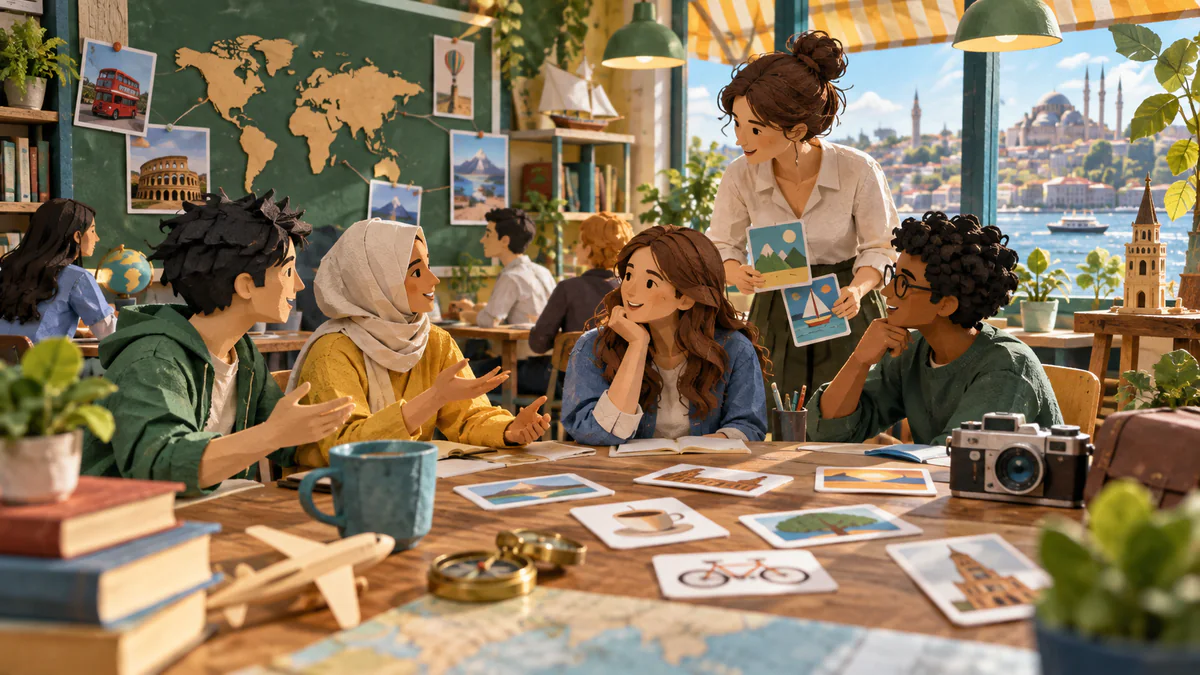
İngilizce Dersi öğrenme görseli
Tamamı ücretsiz6. sınıf öğrenme rotan hazır.
MEB programı ↗
Konu haritası

Üniteler ve alt konular

Başlıklara dokunarak ayrıntıları açabilir, hazır olduğunda mini teste geçebilirsin.

CLASSROOM LIFESub-themes: Daily and study routinesVocabulary for daily and study routinesNouns: A habitVerbs: To brushAdjectives: RegularAdverbs: FirstlyVocabulary for learning activities in the classroomNouns: A diaryVerbs: To continueAdjectives: CreativeAdverbs: EasilyVocabulary for cardinal numbers 100-500: From 100 to 500Vocabulary for ordinal numbers 1-50: From 1st to 50th*National and Religious Days“23 April National Sovereignty and Children’s Day”“19 May Commemoration of AtatürkYouth and Sports Day”“15 July Democracy and National Unity Day”“30 August Victory Day”“Eid al-Fitr (Eid-al-Ramadan)”“Festival of Sacrifice (Eid-al-Adha)”*Local CulturalThe Present Progressive Tense: (I am reviewing my notes for the test now)Possessive adjectives: (I always keep my diary on the table)Word order with adverbs: (He normally brushes his teeth after breakfast)Question: How often: (How often do you review your notes before a test?)Use of The Present Progressive Tense: Indicating actions happening right now or ongoing activitiesUse of Present Progressive Tense vs Present Simple Tense: Comparing actions happening right now and general truthsUse of question tags for the Simple Present Tense and Progressive Tense: Confirming general truthsUse of possessive adjectives: Showing ownership in relation to nounsUse of the word order with adverbs: Organizing adverbs correctly to modify verbsUse of question: How often: Asking about the frequency of an actionI got full marks on the English test!Do we have to discuss the answers in pairs?I need some help with vocabulary work!Intonation of negative statements
FAMILY LIFESub-themes: family members’ jobsVocabulary for family members’ jobsNouns: An authorVerbs: To reportVocabulary for different types of family homes and housesNouns: Rest (remaining part)Adjectives: DownstairsAdverbs: Double*National and Religious Days“23 April National Sovereignty and Children’s Day”“19 May Commemoration of AtatürkYouth and Sports Day”“15 July Democracy and National Unity Day”“30 August Victory Day”“Eid al-Fitr (Eid-al-Ramadan)”“Festival of Sacrifice (Eid-al-Adha)”*Local CulturalSocial and Moral Considerations of the ThemeThe Present Progressive Tense for the future: (We are moving to a new apartment next week)The Simple Present Tense for the future: (The plane to London takes off at 9:15 tomorrow morning)Conjunctions (whenWh- questions (Which): (Which job does your cousin do? Which room is upstairs?)Reflexive pronouns: (The reporter is introducing herself to the audience)The Present Progressive Tense for the future: Talking about planned future events or arrangementsThe Simple Present for the future: Expressing scheduled or regular events in the futureWh questions (Which): Asking for specific information or making distinctionsReflexive pronouns: Emphasizing that the subject and object of an action are the sameKeep that secret in the familyMy father works all hours on his new job!Please make yourself at home!Vowels: a: (/ae//aeı//ə//a://eɪ//a//ɔː//eə/)/i://ə/)Consonants: b: (/b/)/k/)
LIFE IN NATURE & GLOBAL PROBLEMSSub-themes: activities in natureVocabulary for activities in nature: An adventureVerbs: To campAdverbs: HighVocabulary for environmental problems in the world and solutions: A dangerVerb: To destroyAdjective: PlasticPreposition: AgainstAdverbs: Little*National and Religious Days“23 April National Sovereignty and Children’s Day”“19 May Commemoration of AtatürkYouth and Sports Day”“15 July Democracy and National Unity Day”“30 August Victory Day”“Eid al-Fitr (Eid-al-Ramadan)”“Festival of Sacrifice (Eid-al-Adha)”*Local CulturalThe Simple Past Tense: (People mostly ignored the importance of recycling)Must and have to for obligation: (We must reduce plastic waste to protect marine life)Use of The Simple Past Tense: Expressing actionsUse of Question tags for The Simple Past Tense (irregular verbs): Confirming information or asking for agreement about past act…Use of “must and have to” for obligation: Expressing strong obligation or necessityI’m going to go hikingMy dad has green fingersShe’s wild about protecting nature!/ʌ//juː/)Consonants: q: (/kjuː/)/r/ (AmE.))/ɛs//z/)/t/)
LIFE IN THE NEIGHBOURHOOD AND CITYSub-themes: festivals and events (sportsVocabulary for festivals and events in the neighbourhood and cityNouns: A festivalVerbs: To celebrateAdjectives: PleasedAdverbs: AnyVocabulary for transportation in the neighbourhood and cityNouns: Means of transportVerbs: To catchPhrases: Public transportAdverbs: AlongThe Simple Past Tense (was-were): (The train was late yesterday because of the rain. The guests were pleased with the meals)Wh- questions (whyGerunds and infinitives: (I enjoy listening to rock music at festivals. We planned to raise money for the jazz performers)Prepositions (prepositions of place: atPrepositions of phrases: on foot*National and Religious Days“23 April National Sovereignty and Children’s Day”“19 May Commemoration of AtatürkYouth and Sports Day”“15 July Democracy and National Unity Day”“30 August Victory Day”“Eid al-Fitr (Eid-al-Ramadan)”“Festival of Sacrifice (Eid-al-Adha)”Social and Moral Considerations of the Theme In this themeUse of the Simple Past Tense (was-were): Describing past eventsUse of Wh questions (whyUse of Gerunds and infinitives: Talking about likesUse of Question tags for past tense (to be): Confirming or seeking agreement about past events or statesUse of Prepositions (prepositions of place: atThe music festival is the talk of the town!We were stuck in a traffic jam on the way to the concert!Can I get a lift to the station?Vowel: i: (/aı//ı//i:/)Consonants: f: (/f/)/dʒ/)
LIFE IN THE UNIVERSE & FUTURESub-themes: planets and the Earth as a planetVocabulary for planets and the Earth as a planetNouns: MoonSunMercuryVenusMarsJupiterSaturnUranusNeptuneVocabulary for extreme weather conditionsNouns: A stormAdjectives: ClosePhrases: Extreme weather conditionsAdverbs: ExtremelyVocabulary for life on Earth in the futureNouns: An experienceVerb: To existAdjective: Alive*National and Religious Days“23 April National Sovereignty and Children’s Day”“19 May Commemoration of AtatürkYouth and Sports Day”“15 July Democracy and National Unity Day”“30 August Victory Day”“Eid al-Fitr (Eid-al-Ramadan)”“Festival of Sacrifice (Eid-al-Adha)”*Local CulturalBe going to Future Tense: (Scientists are going to build new space stations to study planets outside our solar system)The Simple Future Tense (prediction): (I think new planets will have conditions suitable for life)Use of “Be Going to Future” Tense: Expressing future plansUse of the Simple Future Tense (prediction): Expressing predictions about what might happen in the futureQuestion tags for future tenses: Confirming information or asking for agreement in a sentence about the futureIs there a bright future ahead with new technologies?We need to take care of our green planet!The new eco-cities give us a glimpse of future living!Tomorrow’s world will be different with new technologies!Consonants: v: (/viː//v/)/ks//gz/)/j//ɪ//iː/)/ziː/ (AmE.)/z/)
LIFE IN THE WORLD & CULTURESub-themes: CountriesVocabulary for countriesNouns: A countryCountries: TürkiyeEnglandGermanyAustriaGreeceTurkish Republic of Northern CyprusPolandDenmarkBelgiumSwedenIndiaSpainItalyNationalities/Languages: Turkish/TurkishEnglish/EnglishGerman/GermanAustrian/GermanGreek/ GreekTurkish Cypriot/TurkishPolish/PolishDanish/DanishBelgian/Dutch-French-GermanDutch/DutchSwedish/SwedishSpanish/SpanishFrench/FrenchItalian/ItalianIndian/Hindu-EnglishAdjectives: NationalVocabulary for food types and events from different parts of the world: Nouns: ExperienceVerbs: To experienceAdjectives: SourAdverbs: EverywherePhrases: Enjoy your meal!*National and Religious Days“23 April National Sovereignty and Children’s Day”“19 May Commemoration of AtatürkYouth and Sports Day”“15 July Democracy and National Unity Day”“30 August Victory Day”“Eid al-Fitr (Eid-al-Ramadan)”“Festival of Sacrifice (Eid-al-Adha)”*Local CulturalSocial and Moral Considerations of the ThemeThe Simple Past Tense: (We enjoyed the delicious cuisine at the street food festival)Use of The Simple Past Tense: Expressing actionsUse of question tags for The Simple Past Tense (regular verbs): Confirming information or asking for agreement about past actionsI had culture shock when we moved to Spain!We both love football so we speak the same language!The Topkapı Palace is world famous!(ng)Vowel: o: (/əʊ//ɒ//əʊ/)Consonants: l: (/ɛl/ /l/)/m/)/n/)
PERSONAL LIFESub-themes: body partsVocabulary for body partsNouns: ImageVerbs: To seemAdjectives: AttractiveAdverbs: SimplyVocabulary for clothes Personality and character: CharacterVerbs: to lookAdjectives: BrilliantAdverbs: Happily*National and Religious Days“23 April National Sovereignty and Children’s Day”“19 May Commemoration of AtatürkYouth and Sports Day”“15 July Democracy and National Unity Day”“30 August Victory Day”“Eid al-Fitr (Eid-al-Ramadan)”“Festival of Sacrifice (Eid-al-Adha)”*Local CulturalHave/Has got: (She has got a lovely necklace. I have got a new swimsuit for the summer)Wh questions (whose): (Whose wallet is this?)Use of have/has got: Expressing possessionUse of wh- questions (whose): Requesting information about propertyUse of comparative and superlative adjectives (regular and irregular): Comparing two things or people and comparing three or mo…OK smarty pantsYou’re full of beans this morning!Don’t panicIntonation of questions and question tags
SCHOOL LIFESub-themes: RolesVocabulary for rolesNouns: A permissionVerbs: To supportAdjectives: HelpfulAdverbs: CarefullyVocabulary for school routinesNouns: An instructionVerbs: To enterAdjectives: LaterAdverbs: Before*National and Religious Days“23 April National Sovereignty and Children’s Day”“19 May Commemoration of AtatürkYouth and Sports Day”“15 July Democracy and National Unity Day”“30 August Victory Day”“Eid al-Fitr (Eid-al-Ramadan)”“Festival of Sacrifice (Eid-al-Adha)”*Local CulturalArticles (a/an/the): (A leaderImperatives: (Enter the classroom quietly)Personal pronouns: (He listens carefully to the teacher’s instructions)There is/There are: (There is a leader in every group. There are instructions written on the board)Wh- questions (who-when-what-where): (Who is the leader of the class? Where do we enter the building?)The Present Simple Tense: (A leader always cares for the team)Adverbs of frequency: (Students often greet their teachers before entering the class)Object pronouns: (The teacher supports them in their work)Use of articles (a/an/the): Expressing non-specific or general items and specific or definite itemsUse of imperatives: Giving commandsUse of The Present Simple Tense: Expressing routinesUse of adverbs of frequency: Expressing the frequency of actions or eventsUse of personal pronouns: Indicating who is involved in the actionUse of there is/there are: Introducing existence or presenceUse of wh- questions (who-when-what-where): Asking about thingsUse of object pronouns: Replacing nouns that receive the action in a sentenceShe’s such a team player during all school projects!You need to work harder to make the grade!The choir is always in the spotlight during the Republic Day celebrations!Intonation of positive statements
ⓘ
Şeffaf kaynak bilgisi: Konu başlıkları MEB öğretim programı sayfalarından alınmış, mini testler EFEBEY.AI tarafından bağımsız olarak hazırlanmıştır. EFEBEY.AI, MEB’in resmî sitesi değildir.